INFORMATION ABOUT
INDIA NATIONAL CURRENCY
INDIAN RUPEE
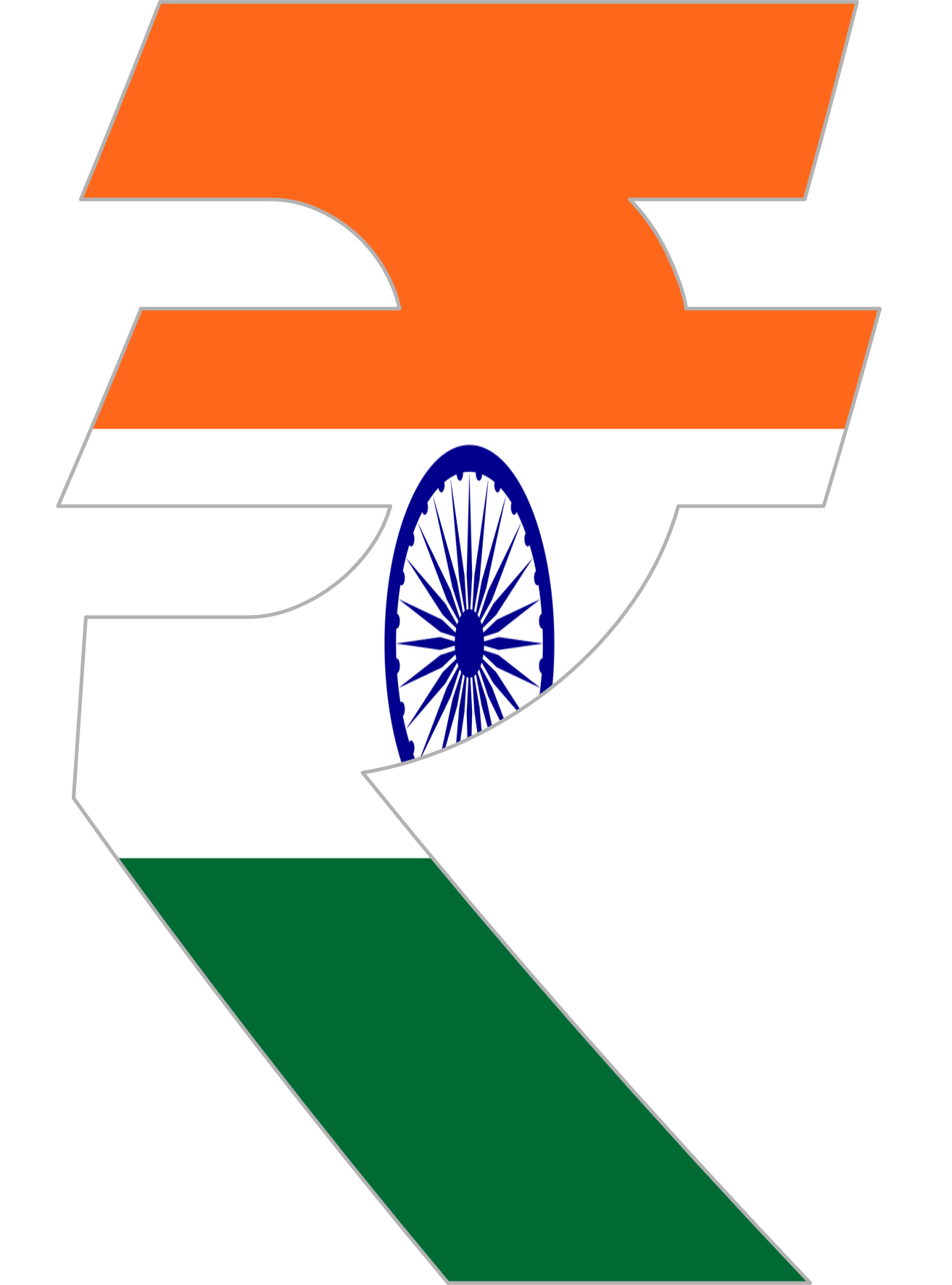 |
|
|
|
|
|
|
|
|
|
|
|
|
|
|
|
|
|
|
|
|
|
|
|
|
|
|
|
|
|
|
|
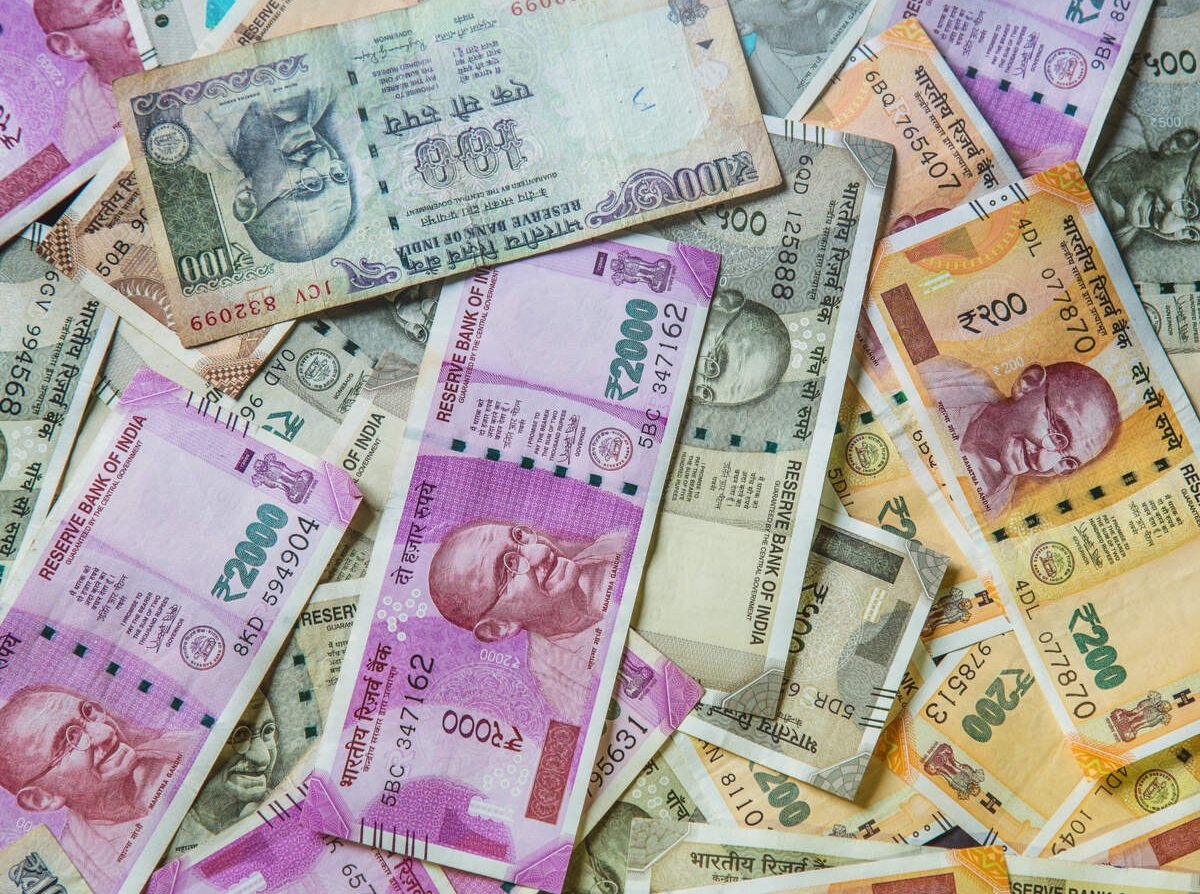
On 15th August 1947, Government of India officially adopted Indian Rupee as National Currency of India and Reserve Bank of India (RBI) is responsible for management and circulation of India National Currency Indian Rupee.
.jpg)
| |
|
|
|
|
|
|
|
|
|
|
|
|
|
|
|
|
|
|
|
|
|
|
|
|
|
|
|
|
|
|
|
| |
|
|
|
|
|
|
|
|
|
|
|
|
|
|
|
|
|
|
|
|
|
|
|
|
|
|
|
|
|
|
|
P r e - I n d e p e n d e n c
e
I n d i a C
u r r e n c y
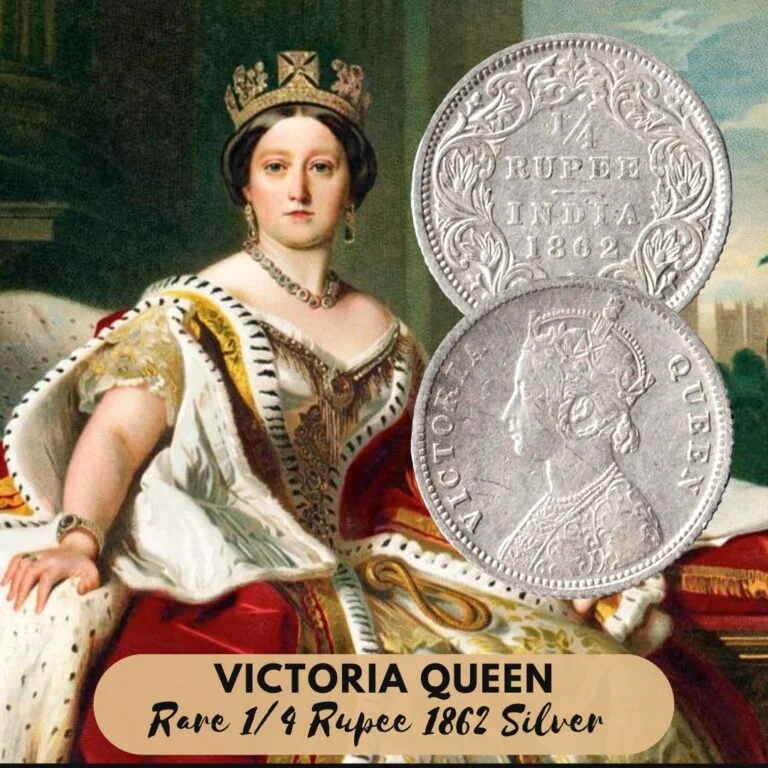
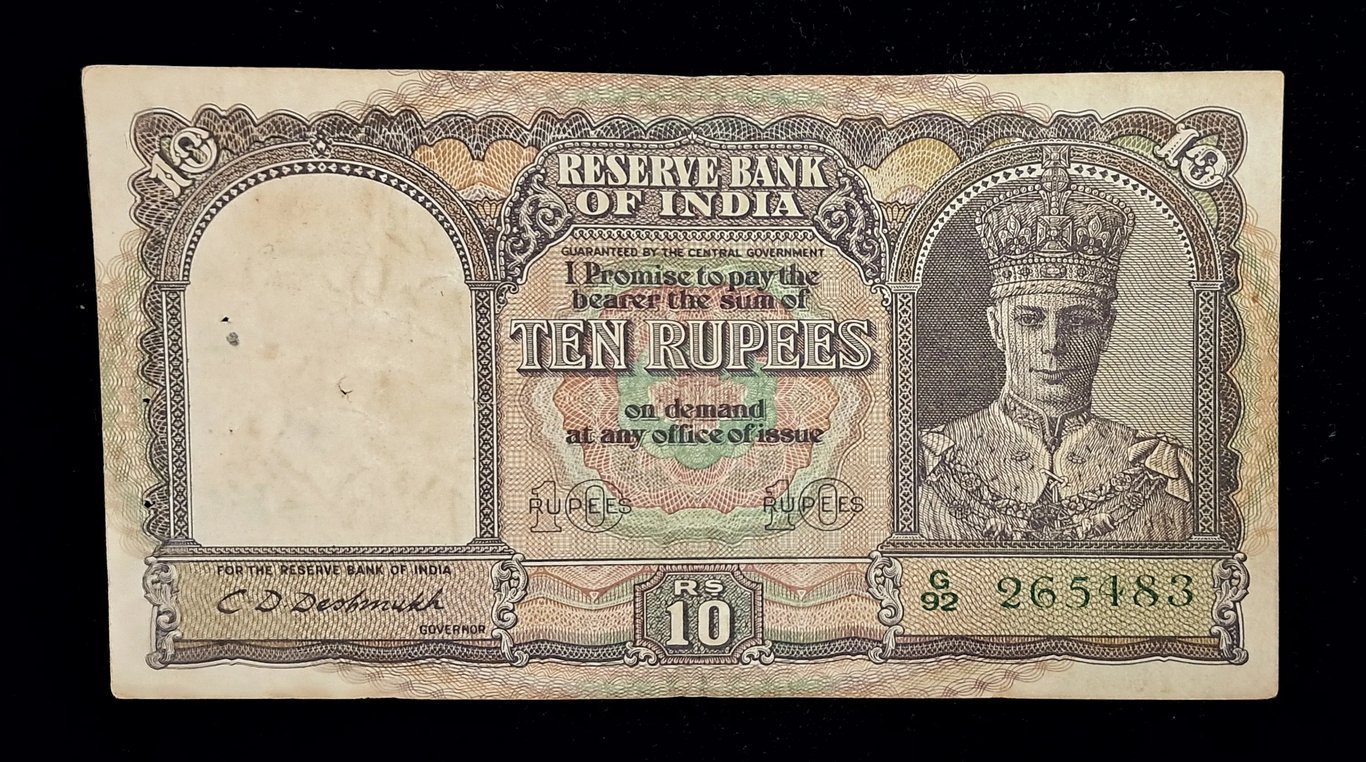
In Pre-Independence India (from 1857 to 1947), India had rupee as currency but under British rule and that currency have images or portrait of reigning British Manarch:-
| |
|
|
|
|
|
|
|
|
|
|
|
|
|
|
|
|
|
|
|
|
|
|
|
|
|
|
|
|
|
|
|
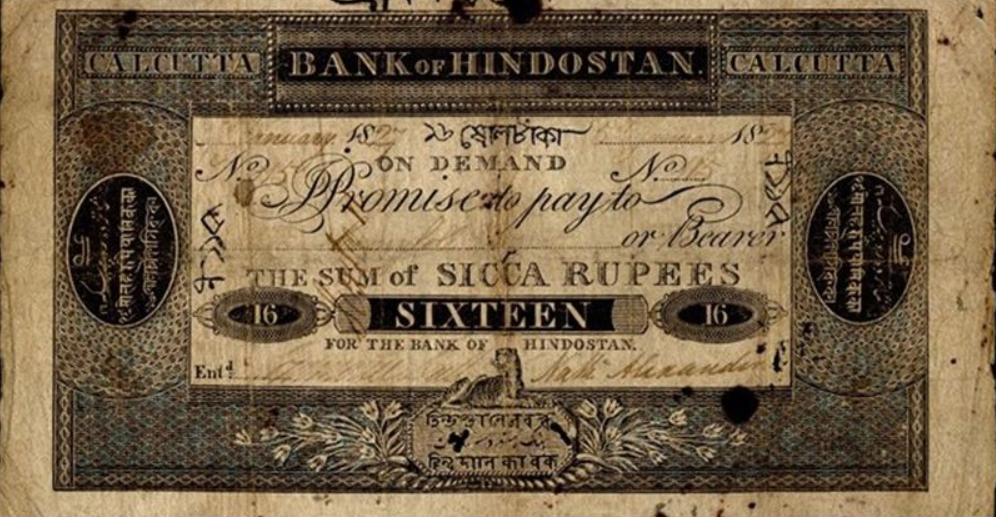
Under British Colonial rule, First official paper banknote currency was issues in 1861 by British Government of India after Paper Currency Act of 1861, which give British Government sole right to issue notes and also ending private bank issues currency.
| |
|
|
|
|
|
|
|
|
|
|
|
|
|
|
|
|
|
|
|
|
|
|
|
|
|
|
|
|
|
|
|
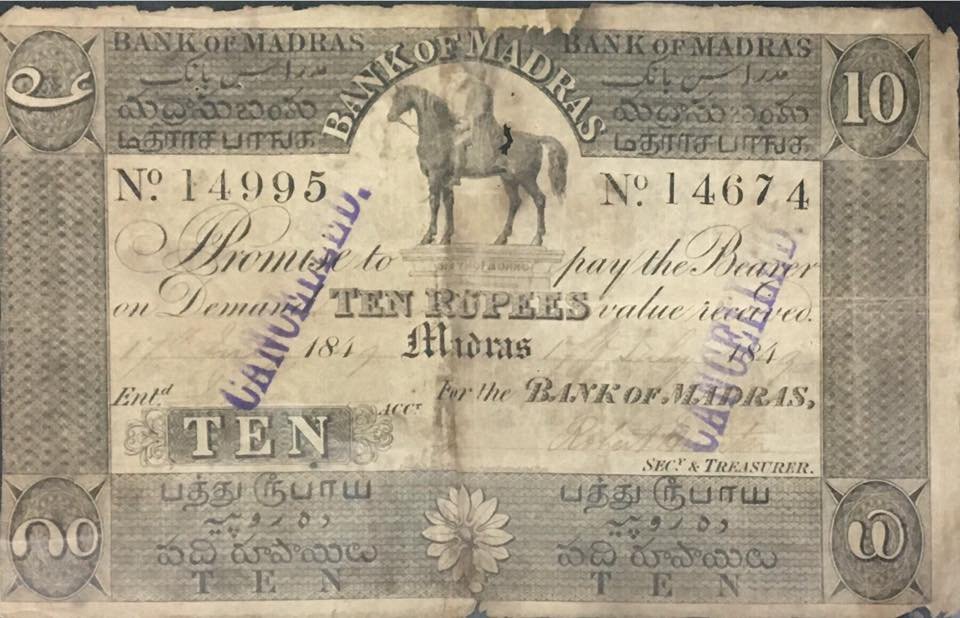
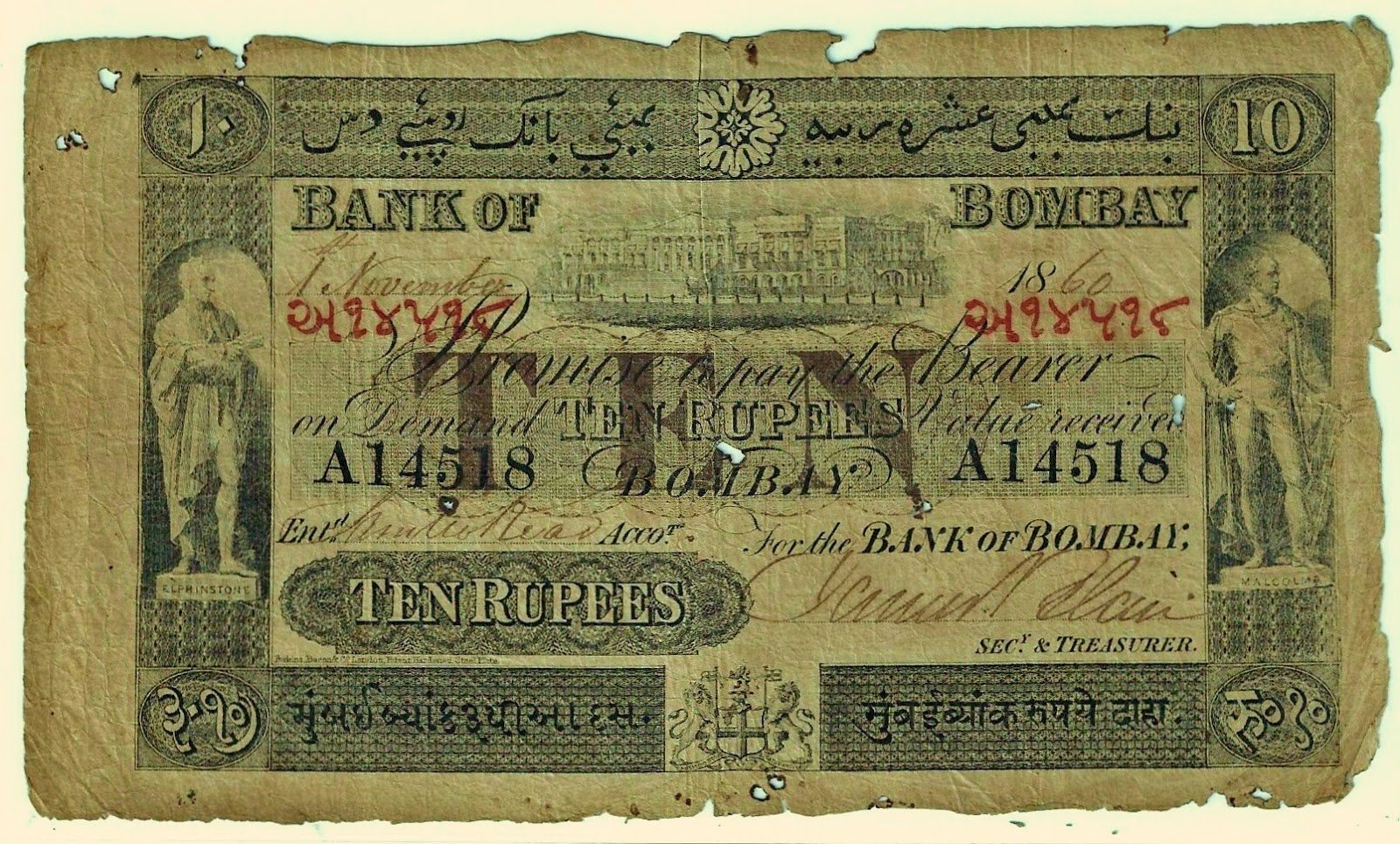
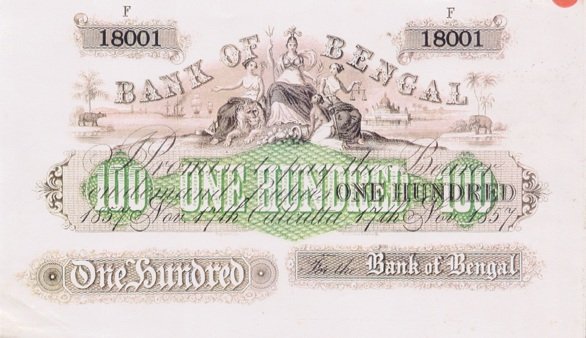
Before 1861, presidency and private banks issues there own notes:-
| |
|
|
|
|
|
|
|
|
|
|
|
|
|
|
|
|
|
|
|
|
|
|
|
|
|
|
|
|
|
|
|
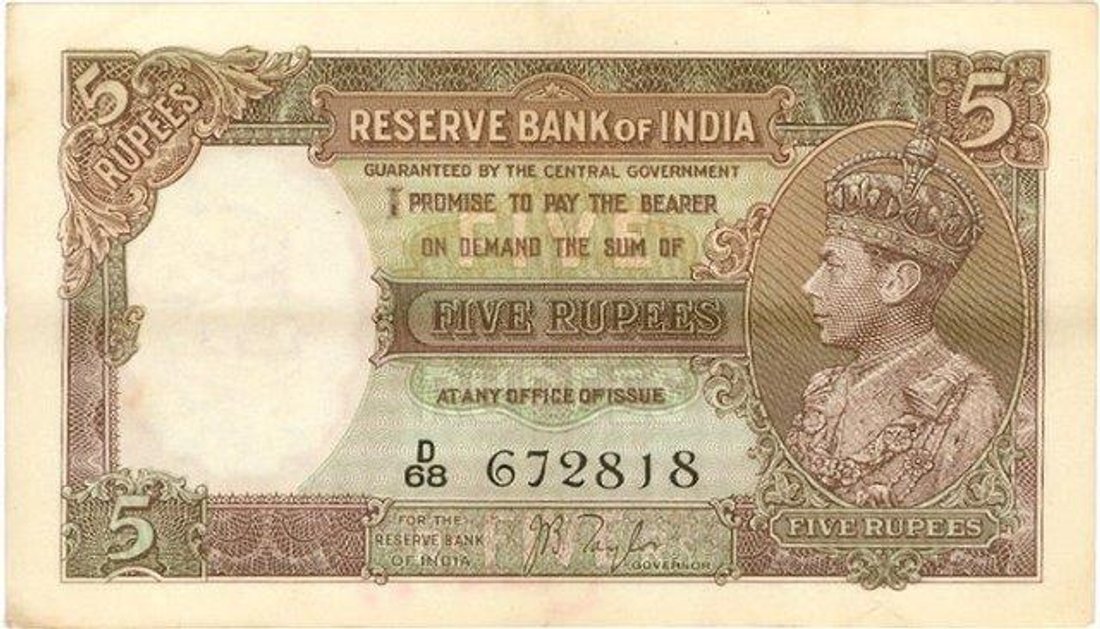
Under British Colonial rule, Reserve Bank of India ( RBI ) act 1934, was a foundational law that established India's Central bank on 1st April 1935 which is known as Reserve Bank of India (RBI) and it take over note issuance and in January 1938, Reserve Bank of India (RBI) issues five rupees note which have portrait of King George VI.
| |
|
|
|
|
|
|
|
|
|
|
|
|
|
|
|
|
|
|
|
|
|
|
|
|
|
|
|
|
|
|
|
| |
|
|
|
|
|
|
|
|
|
|
|
|
|
|
|
|
|
|
|
|
|
|
|
|
|
|
|
|
|
|
|
A f t e r I n d e
p e n d e n c e
I n
d i a C
u r r e n c y
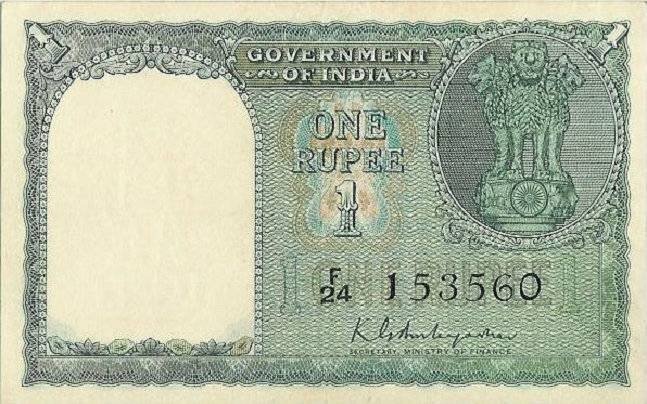
After Independent on
15th
August 1947, India immediately retain British currency
after replacing King
George VI's
portrait with National
symbol of Lion Capital of sarnath on coins and in
1949, Reserve Bank of India (RBI) introduced
one rupee note as
nation's first legal money with Lion Capital of
Sarnath
in water mark window:-
| |
|
|
|
|
|
|
|
|
|
|
|
|
|
|
|
|
|
|
|
|
|
|
|
|
|
|
|
|
|
|
|
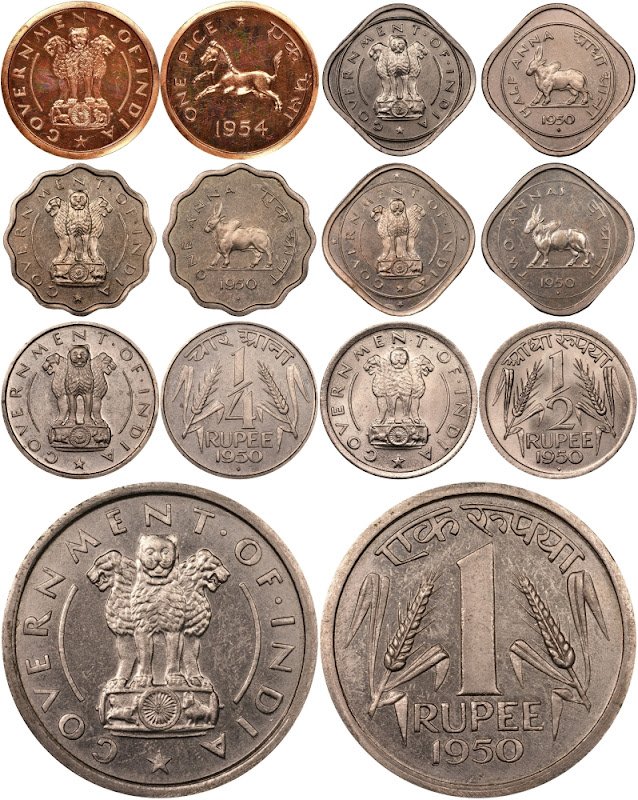
In 1950, Indian Government launched first coins as republic, by keeping same Annas system that is used in Pre-Independence India.
Anna System
1 Rupee = 16 Annas
1 Anna = 4 Pices
1 Pice = 3 Pies
So,
1 Rupee = 16 Annas = 64 Pice = 192 Pies
| |
|
|
|
|
|
|
|
|
|
|
|
|
|
|
|
|
|
|
|
|
|
|
|
|
|
|
|
|
|
|
|
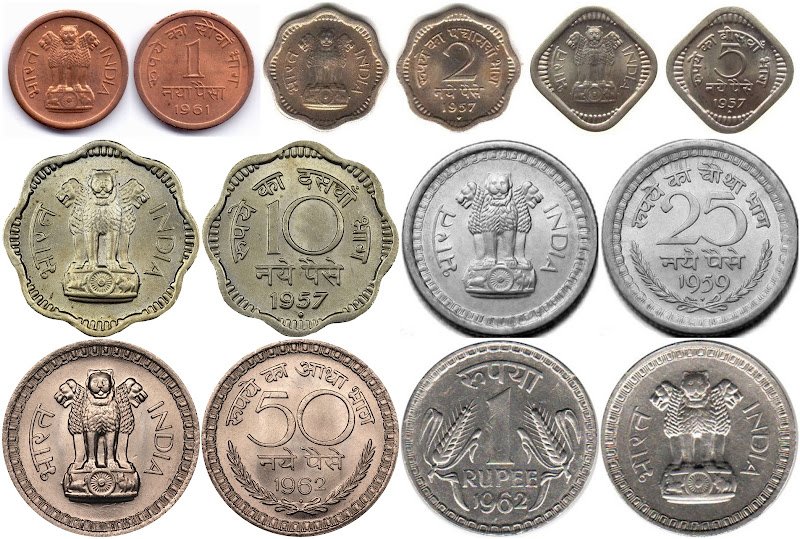
In September 1955, India Coinage Act
was amended to
adopt a Metric
(Decimal) system
for coinage, according to which main unit of currency
was
divided into 100 equal subunits which make
calculations easier by using base-10.
India Coinage Act of 1955
came into
effect on 1st April 1957, Anna currency system was
removed by Indian Government after consultation with
Reserve Bank of India (RBI)
and then new metric system
came into effect on 1stApril 1957 by new system,
one rupee was divided into 100 Naya Paise
(New
Paise).
Metric (Decimal) System
1 Rupee = 100 New ( Naya ) Paise
| |
|
|
|
|
|
|
|
|
|
|
|
|
|
|
|
|
|
|
|
|
|
|
|
|
|
|
|
|
|
|
|
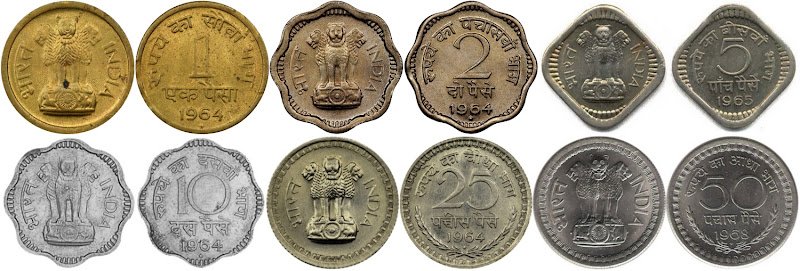
‘Naya Paisa’
(New Paisa) name initially given to distinguish from old ‘pice’
and ‘pies’ and
this Naya Paisa (New Paisa) name dropped on 1st June 1964,
when they become simply Paisa
:-
Metric (Decimal) System
1 Rupee = 100 Paisa
(Initially 1 Rupee = 100 Naya ( New
)
Paisa)
| |
|
|
|
|
|
|
|
|
|
|
|
|
|
|
|
|
|
|
|
|
|
|
|
|
|
|
|
|
|
|
|
| |
|
|
|
|
|
|
|
|
|
|
|
|
|
|
|
|
|
|
|
|
|
|
|
|
|
|
|
|
|
|
|
Mahatma gandhi
on
India
Currency
and
Mahatma Gandhi Series
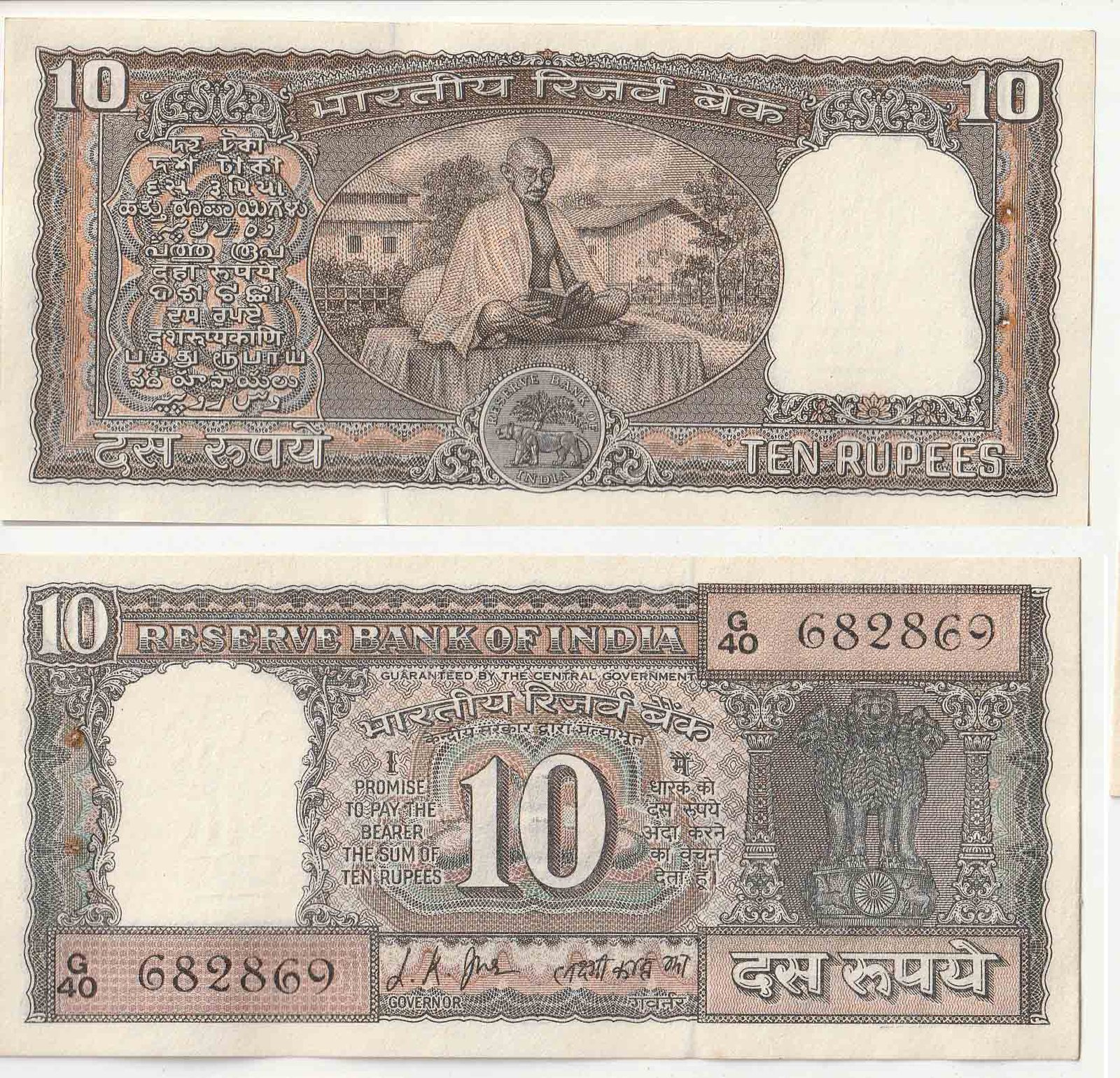
Mahatma Gandhi, first featured on Indian currency in 1969 to commemorate his 100th birthday:-
| |
|
|
|
|
|
|
|
|
|
|
|
|
|
|
|
|
|
|
|
|
|
|
|
|
|
|
|
|
|
|
|
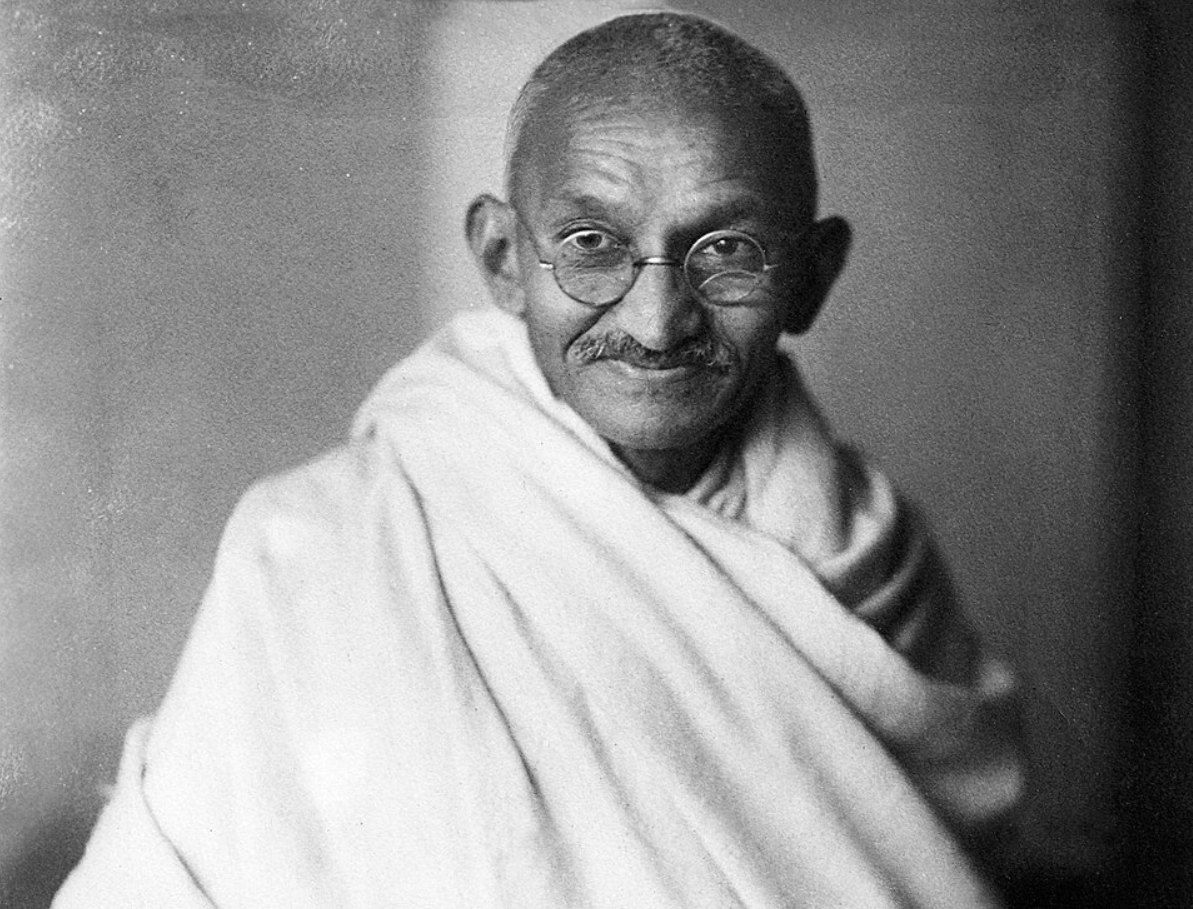
By 1990s for
security, Reserve Bank of India (RBI) and Government of India
needed a human face because it is considered that human face was
harder to forge or copy than symbols.
As for Government of India and Reserve
Bank of India (RBI), ideal person was Mahatma Gandhi:-
| |
|
|
|
|
|
|
|
|
|
|
|
|
|
|
|
|
|
|
|
|
|
|
|
|
|
|
|
|
|
|
|
Mahatma Gandhi is ideal for
currency because Mahatma Gandhi lead India to independencs through non-violent civil disobedience (Satyagraha) against British
rule. Mahatma Gandhi advocate truth (Satya) and non-violence(Ahimsa).
Mahatma Gandhi promoted
self-reliance(Swadeshi),
simple living and social reforms
like fighting
untouchability extra. Due to which, Mahatma Gandhi
become inspiring nation and
global figure for peace and non-violence.
So, in 1990s for
security reason, Reserve Bank of
India (RBI) and Government
of India consider Mahatma Gandhi ideal for currency
and in 1996 Government of India and Reserve Bank of India (RBI)
launched Mahatma Gandhi series:-
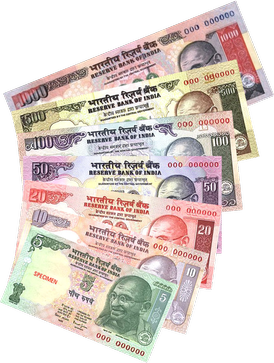
- Note :-
- Two time Mahatma Gandhi Series of currency
release by Government of India and Reserve Bank of India ( RBI ) one in 1996 and
another in 2016.
| |
|
|
|
|
|
|
|
|
|
|
|
|
|
|
|
|
|
|
|
|
|
|
|
|
|
|
|
|
|
|
|
| |
|
|
|
|
|
|
|
|
|
|
|
|
|
|
|
|
|
|
|
|
|
|
|
|
|
|
|
|
|
|
|
Process ,
Selection
and
Reason
of
India
Currency Sign
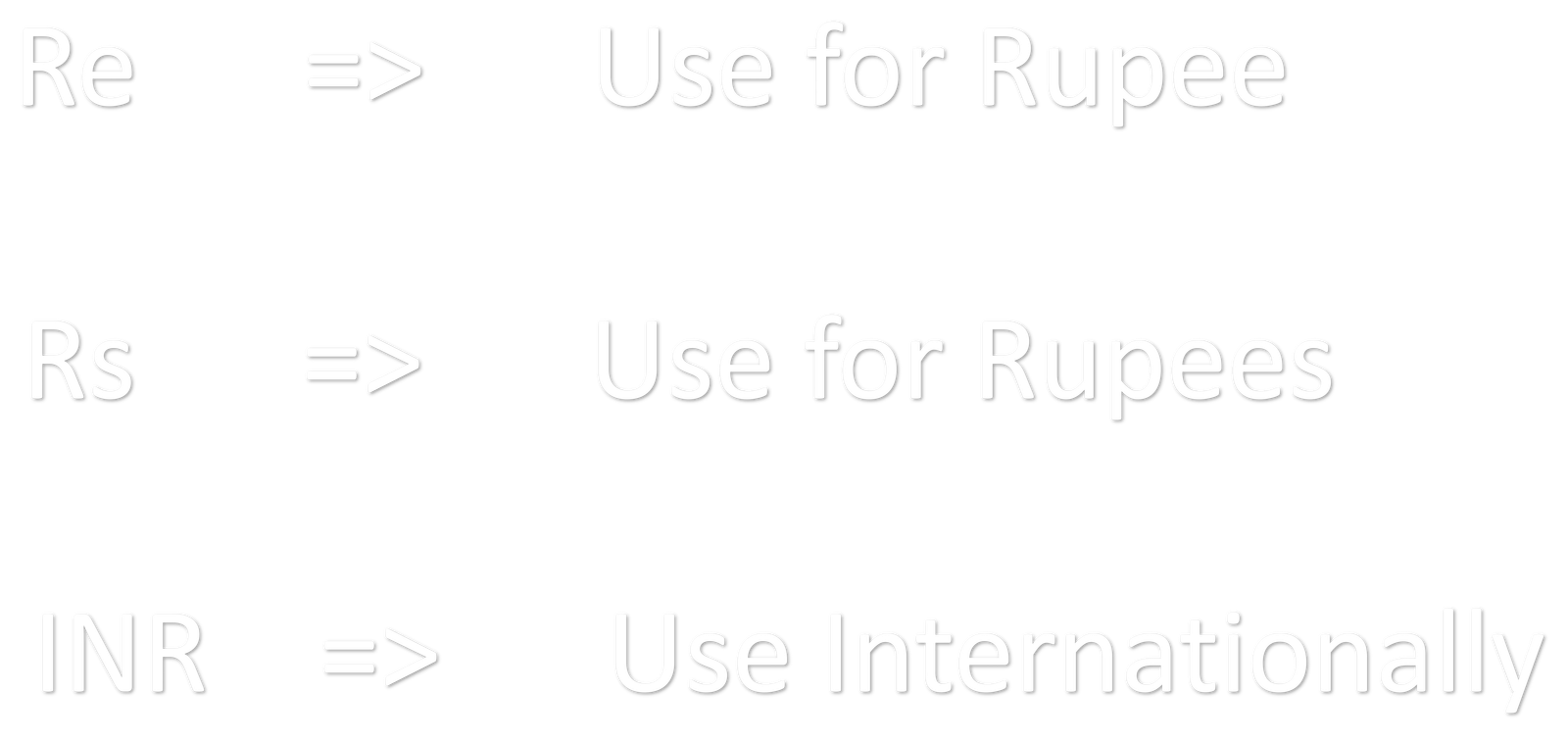
India Currency is represented by Re
for singular
rupee and Rs
for plural and Indian Rupee
distinguish internationally by
International Organization for Standardization (ISO) currency code INR.
| |
|
|
|
|
|
|
|
|
|
|
|
|
|
|
|
|
|
|
|
|
|
|
|
|
|
|
|
|
|
|
|
Other Countries such as Pakistan,
Sri Lanka, Nepal, Mauritius and Seychelles also use Rupees abbreviations Rs
or symbol
Rs
for representing their currency.
So, to distinguish Indian Currency from other countries Government of India require
a different and unique
sign to represent Indian Currency.
| No. | Countries | International Organizations for
Standardization (ISO) Currency Code |
Currency represented by |
|---|---|---|---|
| 1 | Pakistan | PKR | Uses Rsto represent currency |
| 2 | Sri Lanka | LKR | Uses Rsto represent currency |
| 3 | Nepal | NPR | Uses Rsto represent currency |
| 4 | Mauritius | MUR | Uses Rsto represent currency |
| 5 | Seychelles | SCR | Uses Rsto represent currency |
| |
|
|
|
|
|
|
|
|
|
|
|
|
|
|
|
|
|
|
|
|
|
|
|
|
|
|
|
|
|
|
|
On 5th March 2009, Ministry of Finance announced a open Nationwide competition to create sign for Indian rupee. Government of India conducted nationwide open competition in 2010. Out of which Union Council of Ministers approved design of Uday Kumar:-

Udaya Kumar is from Tamil Nadu, was a postgraduate student in Visual Communication at Indian Institute of Technology ( IIT ) Bombay at the time when Udaya Kumar created winning design and later Uday Kumar became Associate Professor in Department of Design at IIT Guwahati.
| |
|
|
|
|
|
|
|
|
|
|
|
|
|
|
|
|
|
|
|
|
|
|
|
|
|
|
|
|
|
|
|
On 15th July 2010,
Government of India presented publicly
and officially adopted
sign of India National Currency Indian Rupee
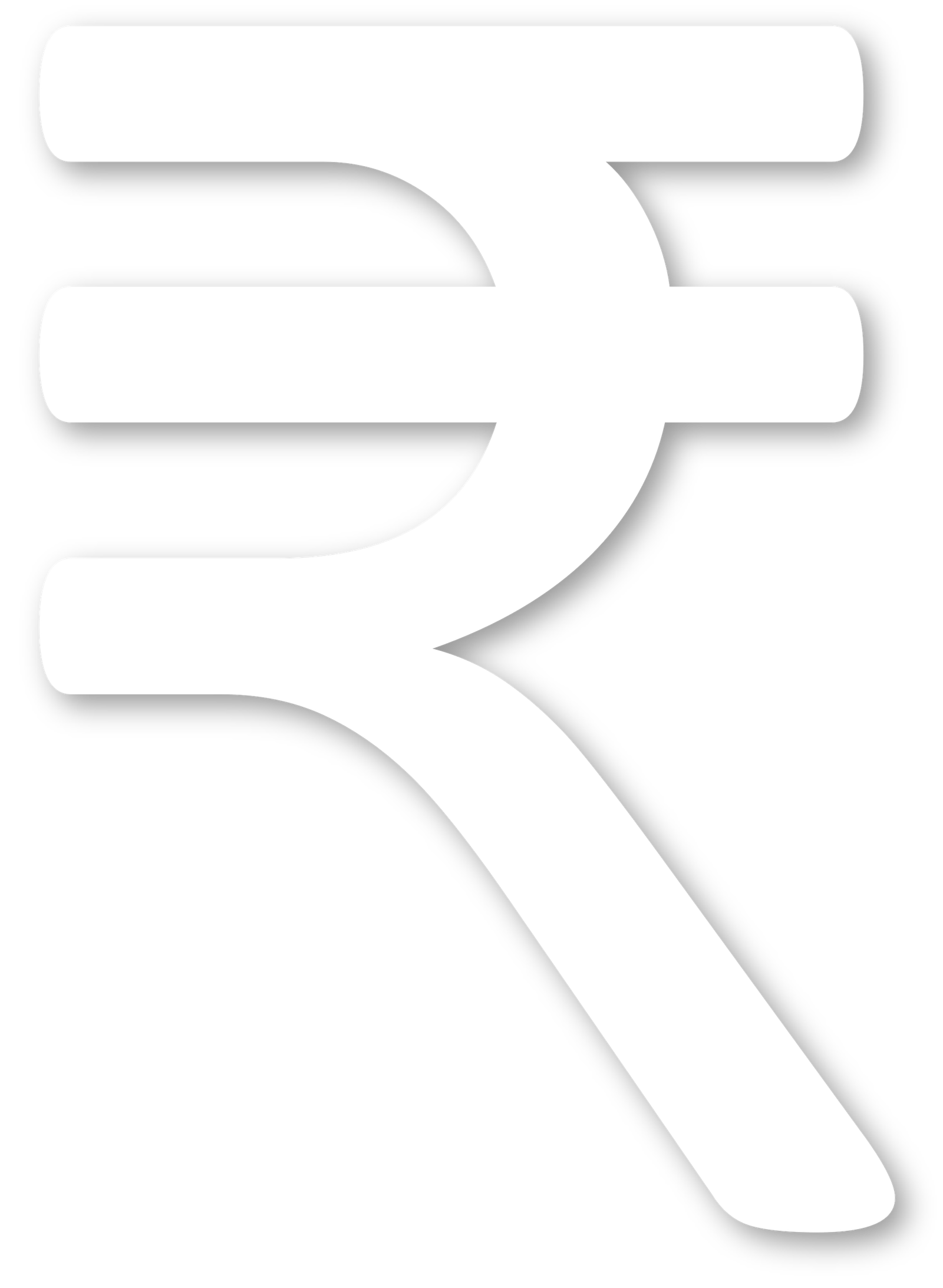
which is a mixture of
Devanagari letter "र" (ra) which come from word "rupaiy" and two horizontal
parallel lines called "equals to" sign (=) which represent balanced economy. Overall Currency sign (₹) signifies
Indian identity and economic strength.
India National Currency Indian Rupee sign:-
| |
|
|
|
|
|
|
|
|
|
|
|
|
|
|
|
|
|
|
|
|
|
|
|
|
|
|
|
|
|
|
|
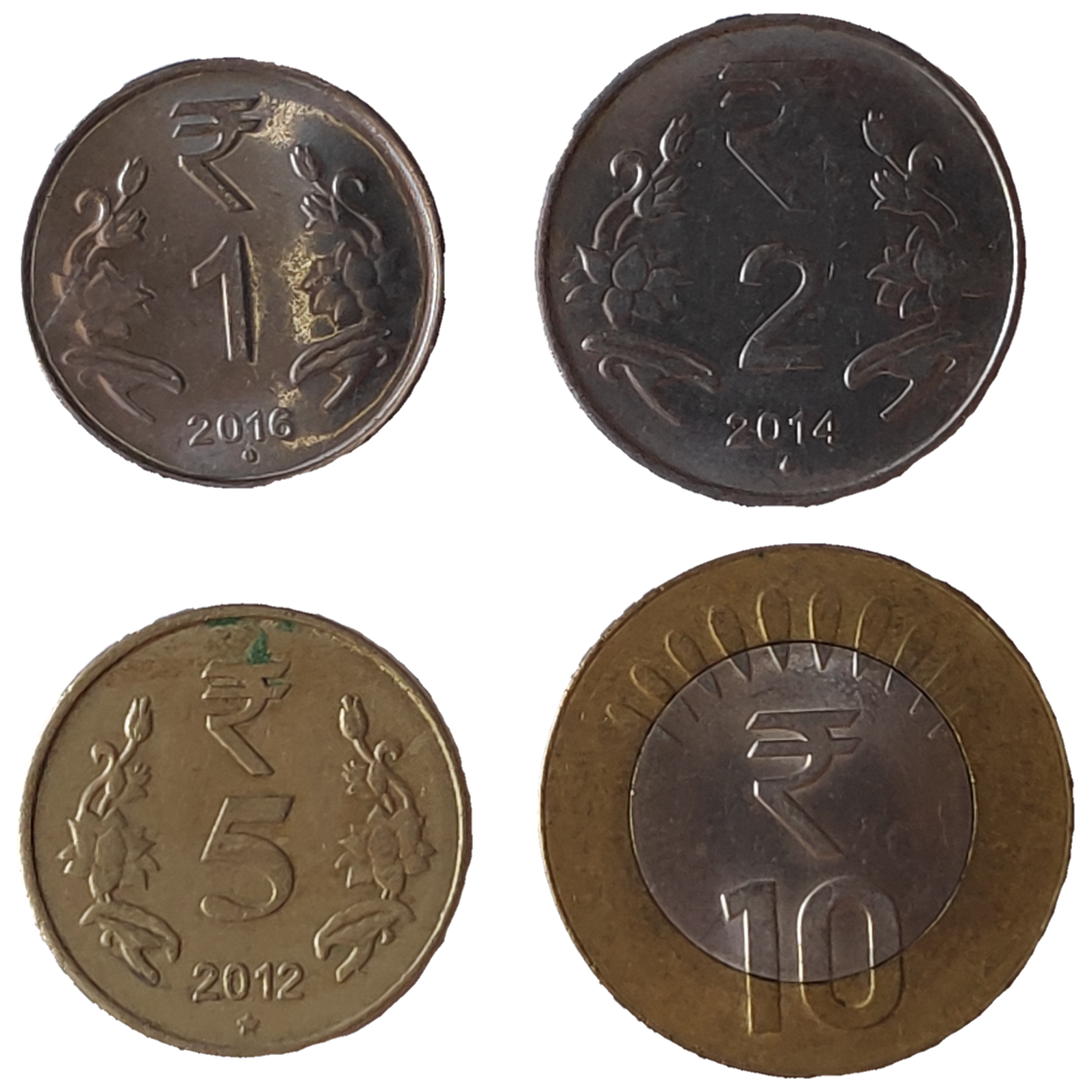
First ₹1, ₹2, ₹5 and new bimetallic ₹10 coins with Indian Rupee Symbol start in 8th July 2011.
| |
|
|
|
|
|
|
|
|
|
|
|
|
|
|
|
|
|
|
|
|
|
|
|
|
|
|
|
|
|
|
|
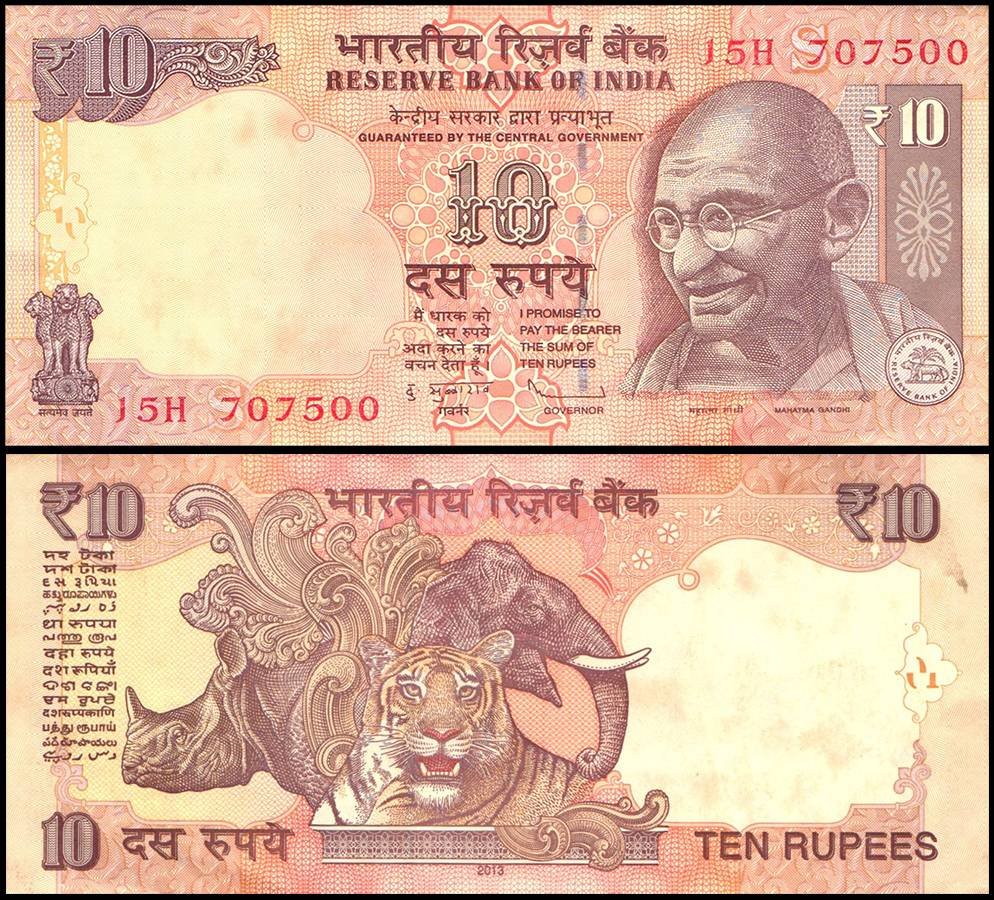
First ₹10 note with Indian Rupee Symbol start on 23rd September 2011.
| |
|
|
|
|
|
|
|
|
|
|
|
|
|
|
|
|
|
|
|
|
|
|
|
|
|
|
|
|
|
|
|
| |
|
|
|
|
|
|
|
|
|
|
|
|
|
|
|
|
|
|
|
|
|
|
|
|
|
|
|
|
|
|
|
Demonetisation
and
New Mahatma
Gandhi
Series
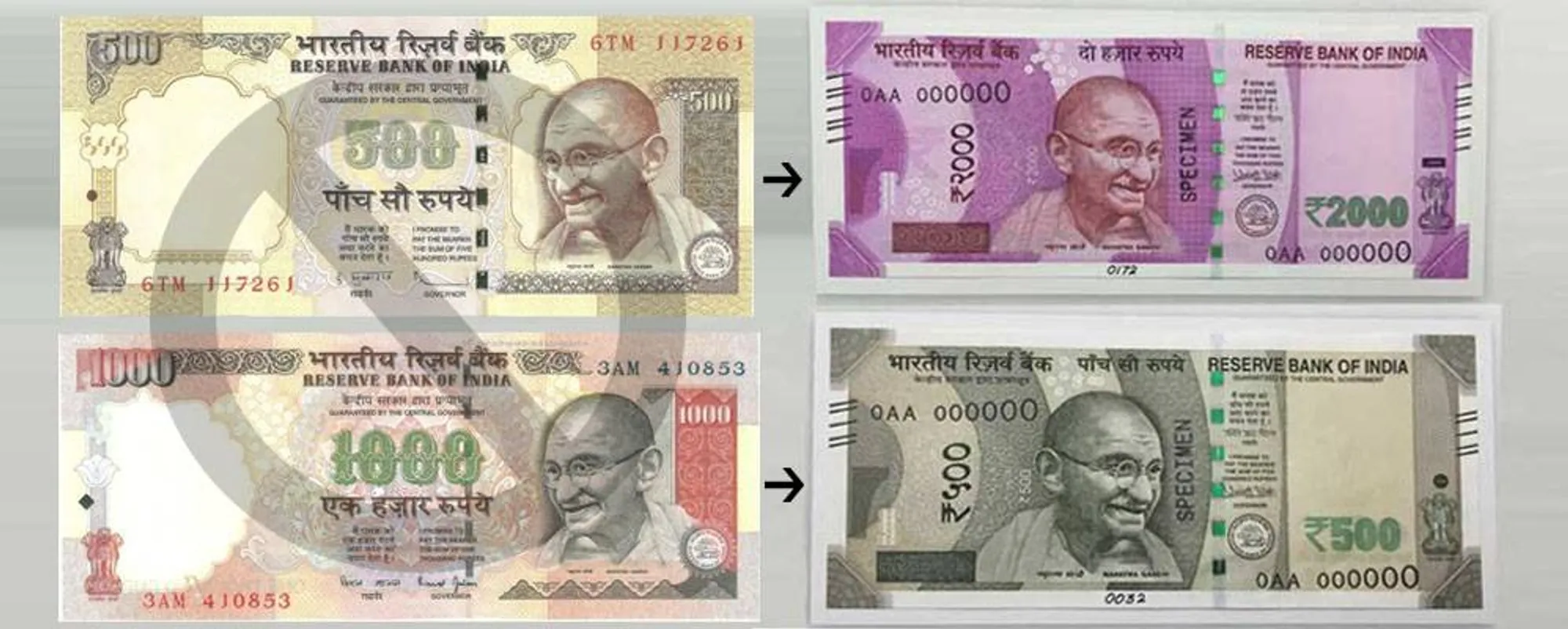
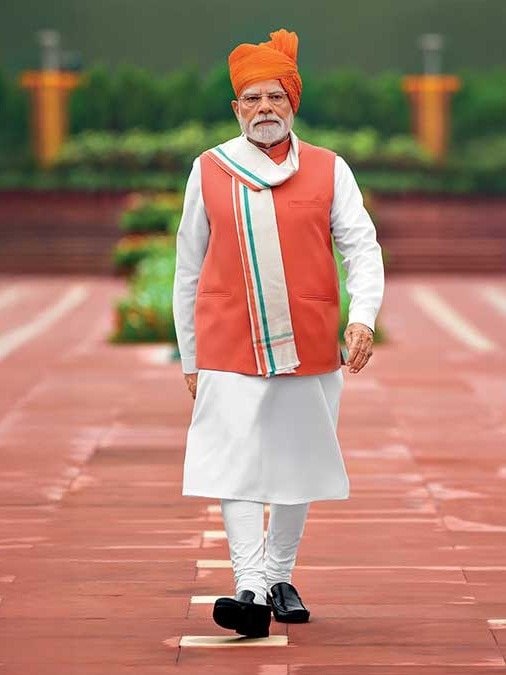
On 8th November
2016, demonetisation of ₹500
and ₹1000 notes take place
by announcement on television
broadcast by then -
Prime Minister- Narendra Madi:-
| |
|
|
|
|
|
|
|
|
|
|
|
|
|
|
|
|
|
|
|
|
|
|
|
|
|
|
|
|
|
|
|
So, on 8th November 2016, demonetisation of ₹500 and ₹1000 notes of Mahatma Gandhi Series occure and New Mahatma Gandhi Series of ₹500 and ₹2000 were issues.